



Loyal Lovin readers can support Lovin so we can continue to share the stories of all amazing cities
Minimum custom amount to enter is AED 2
By donating, you agree to the Privacy Policy and Terms of Service

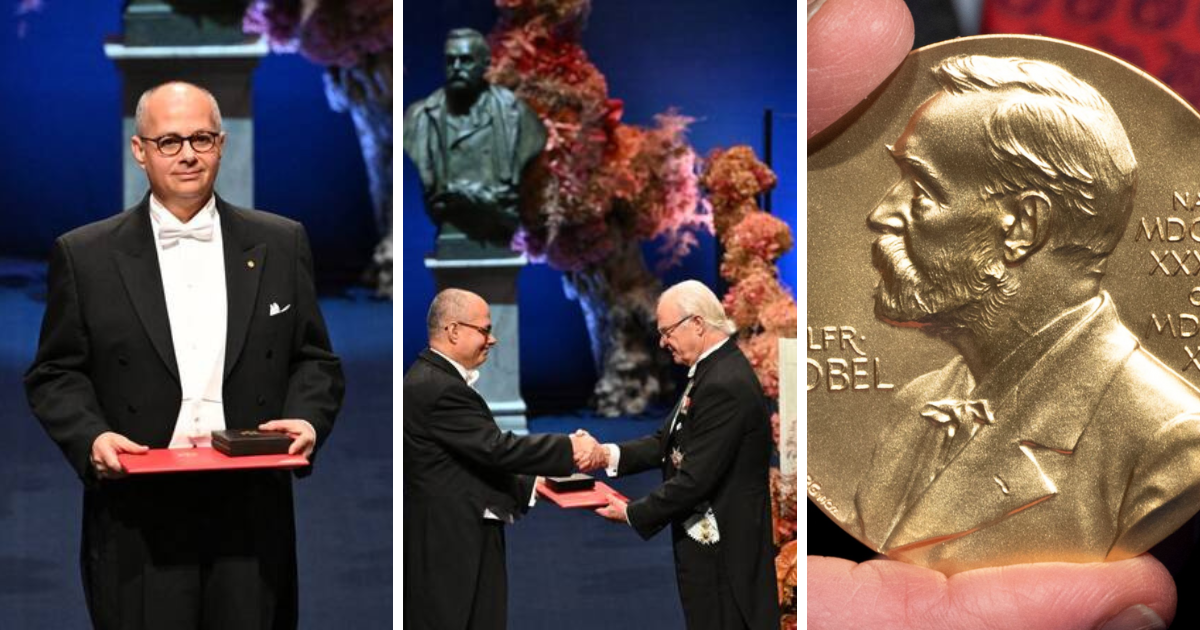
Omar Yaghi’s story truly sounds like a movie, and that too for all the right reasons!
グランドホテル(受賞者が泊まるホテル)の一室にてYaghi研Reunion。
ノーベル賞授賞式・晩餐会の様子をライブビューで堪能してきました。Congratulations to Omar!!#NobelPrize pic.twitter.com/GK0yalYKEn— Kounosuke OISAKI | 生長 幸之助 (@K_Oisaki) December 11, 2025
Recommended
 11 Drones Intercepted Across The Kingdom In 10-Hour Defense Operation
 Ithra Celebrates Saudi Founding Day with Three Cultural Nights in Dhahran
 Riyadh’s Public Transport Is Officially Running On Ramadan Hours
Yaghi was awarded for his groundbreaking metal-organic frameworks (MOFs) sponge-like structures that can pull water from desert air, capture CO₂, store toxic gases, and clean our planet. He shares the $1.2M prize with collaborators Richard Robson and Susumu Kitagawa, after 50 years of collective innovation.
What makes Yaghi’s journey remarkable?
“My journey began far from any laboratory. I grew up in Amman, Jordan, in a refugee family of ten children, in a home with no running water and no electricity, sharing our space with livestock, our family’s livelihood. Hardship was everywhere. My chances for success were… pic.twitter.com/Hqhs2UEZoy
— The Nobel Prize (@NobelPrize) December 10, 2025
At just 10 years old, he fell in love with chemistry, a spark that would shape decades of work to tackle one of the world’s biggest challenges: harvesting clean water from the air.
Yaghi’s MOFs are essentially super-powered invisible sponges, capable of capturing carbon dioxide, storing hydrogen, trapping toxic gases, and speeding up chemical reactions. His innovations are already moving out of labs and into real-world solutions through companies focused on water harvesting and carbon capture.
This Nobel win is historic: Yaghi is the first Saudi national and only the second Arab-born scientist to win the Chemistry Nobel.
From a refugee camp in Jordan to UC Berkeley and now Stockholm, his journey is proof that curiosity, resilience, and a spark at age 10 can change the world!
Minimum custom amount to enter is AED 2
By donating, you agree to the Privacy Policy and Terms of Service
 Lovin Riyadh Newsletter